Workplace Trends to Watch in 2026
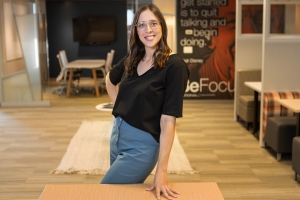
As organizations continue navigating a work landscape defined by change, the workplace has had to evolve with it. Manager, Interior Designer, Maddie Kranda, shares insights that resonate with the shift in the industry: a shift toward purposeful, people-centered environments that anchor culture, support evolving workstyles, and create meaningful connections.
Choice & Connection
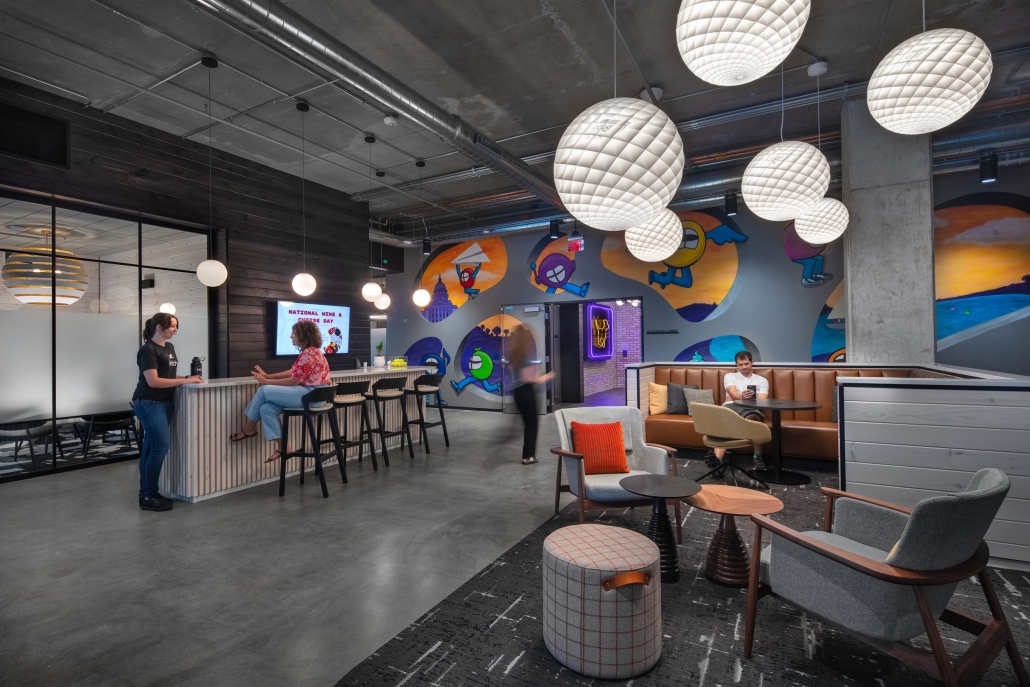
Organizations are moving away from prescriptive layouts and toward ecosystems of choice, where employees can flex between zones for focus, informal connection, or collaboration. A core question leaders are asking is: “What are the right types of spaces to support the work we’re doing and how are we creating opportunities for collaboration or connection?”
This shift is fueled by a broader understanding that space directly influences culture. When employees can choose how and where they work throughout the day, workplaces become more intuitive, empowering, and human. Maddie says, “Space type is really unique to each individual client.” For LERDAHL, this aligns with our belief that the most effective workplaces are built around culture and the relationships that make each company unique.
Smarter, More Intentional Investments
Maddie shares that many organizations are navigating an evolving landscape, where thoughtful decision-making has never been more important.
In response, organizations are leaning into more strategic, future-focused solutions:
- Selecting adaptable furniture systems
- Prioritizing multipurpose workspaces
- Phasing projects to grow over time
- Balancing long-term vision with near-term practicality
The result? Workplaces that are more flexible, resourceful, and future-ready.
Hybrid Work is Becoming More Human-Centered
Hybrid work hasn’t disappeared it is just evolving. Organizations are still redefining what hybrid really means to them. Rather than adopting external models, companies are embracing highly individualized approaches. “Each project is so unique…we’re talking about what the company needs are and what their challenges are” says Maddie.
Some organizations are encouraging more in-person presence. What is consistent is the desire to design environments that support not only logistical needs but relationships.
Hybrid work has clarified something important: people may not need an office to do their job, but they do benefit from an office to feel connected to culture, purpose, and to people.
AI Is Reshaping Workflows
While organizations continue integrating technology, the rising influence of AI is introducing a new tension in workplace design. “Technology has evolved so much in the last 10 years…and AI is forcing people to have a discussion about creating actual personal connection in their space,” says Maddie.
The more advanced our digital tools become, the more important it is to design spaces that strengthen human relationships. AI cannot replicate the nuance or creativity that happens through in-person interaction.
This is pushing companies to prioritize:
- Social hubs that encourage conversation
- Project spaces that support collaboration
- Environments that reinforce belonging and culture
In 2026, design must support the value of personal connection.
Choice & Mobility
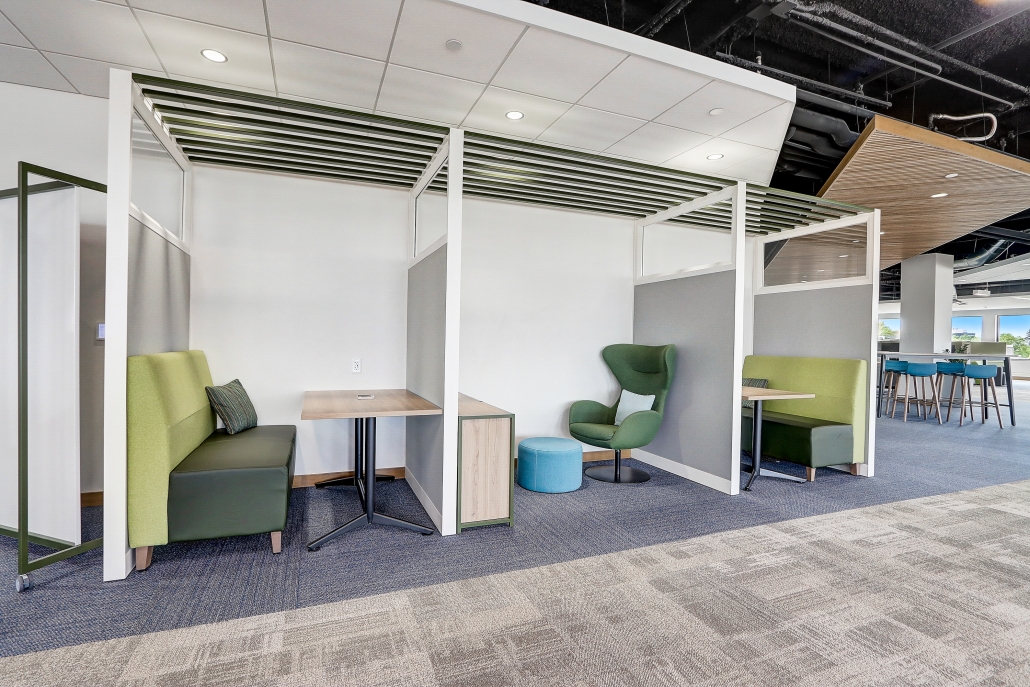
Compared to five years ago, employee expectations have shifted. Choice — in where, how, and with whom people work is now essential. Workers no longer want to be tied to one location in the office. Instead, they want a variety of settings for heads-down work, group collaboration, or informal conversation.
Connection is just as important. Employees want to feel integrated into their company’s culture, and designers are being asked to create the modern equivalent of the “water cooler” —spaces that foster spontaneous and international interactions.
Looking Ahead: Designing for People, Culture, and Possibility
Across every trend, one theme stands out: the future workplace is human-centered.
Organizations aren’t just asking how their workplace should look, but they’re asking what it should do:
- How does it support culture?
- How does it foster connection?
- How does it adapt to change?
- How does it make people feel?
These questions are shaping the most successful work environments of 2026, and they’re the core of how we design at LERDAHL.
About the Author