How to Budget for an Office Remodel, Relocation, or Redesign
Plan with Confidence, Guided by 40+ Years of Workplace Interior Design Expertise
Planning an office remodel, relocation, or redesign is exciting, but determining a realistic budget can feel challenging. Furniture is only one part of the investment. Design, construction, technology, moving, installation, and other project costs can all affect your total budget.
The good news? You don’t need to have every detail figured out before you start.
A well-planned workplace budget develops alongside your project. By identifying your priorities early, understanding the major cost categories, and working with an experienced workplace partner, you can make informed decisions and invest where it matters most. At LERDAHL, we’ve helped organizations plan and create workplaces for more than 40 years. Here’s what to consider as you begin budgeting for your next office remodel, relocation, or redesign.
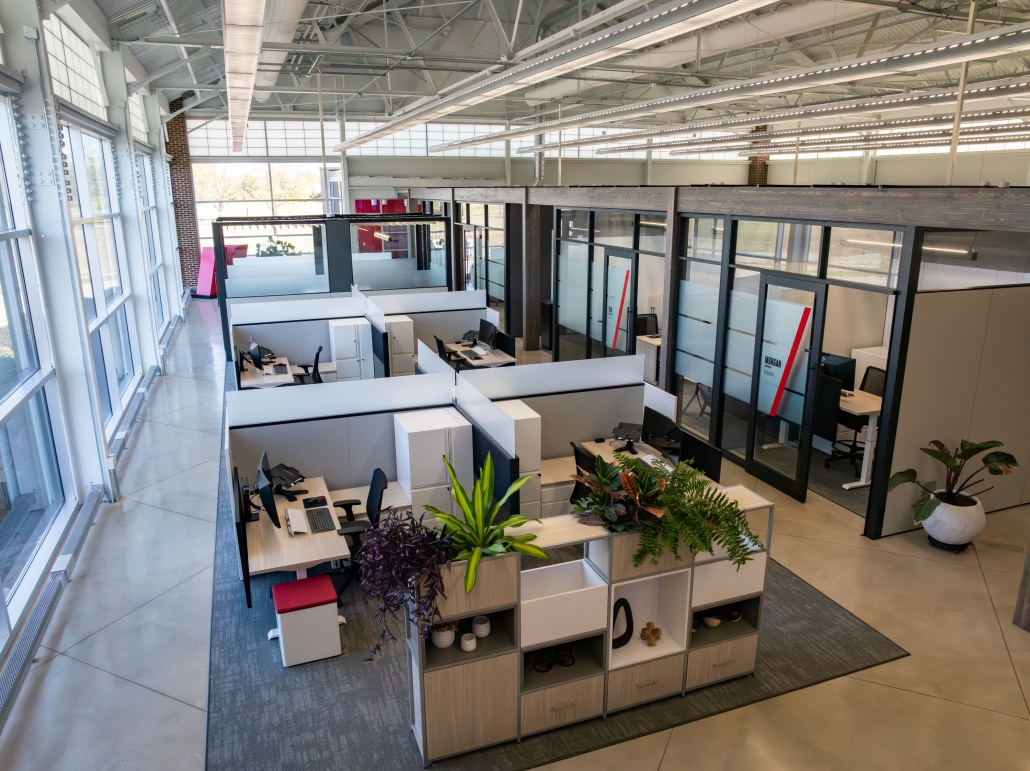
What Should You Include in an Office Project Budget?
A complete workplace project can include several interconnected expenses.
Depending on your project, your budget may need to account for:
- Furniture: Workstations, private offices, conference rooms, collaborative areas, reception spaces, breakrooms, storage, and specialty spaces.
- Design and space planning: Programming, workplace strategy, space planning, finish selections, specifications, and design development.
- Technology and AV: Displays, conferencing technology, room scheduling, power and data access, and other workplace technology.
- Delivery and installation: Freight, receiving, staging, furniture installation, and coordination.
- Project management: Scheduling, vendor coordination, site communication, installation planning, and overall project oversight.
- Moving and decommissioning: Moving employees and equipment, storage, furniture removal, disposal, or preparation of an existing space.
- Contingency: An allowance for changes or unexpected conditions that may arise as the project develops.
How LERDAHL Helps Build Your Workplace Budget
You don’t need to know exactly what your project will cost before talking with us. In fact, developing the budget is part of the planning process.
At LERDAHL, we typically refine the budget as we learn more about your organization, your workplace, and your goals.
Step 1: Establish a Rough Budget
Early conversations help us understand your project at a high level. We’ll discuss factors such as your square footage, number of employees, project type, timeline, workplace needs, and overall goals. From there, we can begin establishing a preliminary budget range. At this stage, the goal isn’t to have every product or finish selected. It’s to determine whether the scope and investment are aligned.
Step 2: Develop a Fluid Budget
As the project takes shape, so does the budget. Space plans, furniture selections, technology requirements, finishes, and other decisions allow us to replace early assumptions with more specific information. We call this a fluid budget because it gives you the flexibility to evaluate options and make tradeoffs. You may decide to invest more heavily in a client-facing conference space, for example, while finding opportunities to save elsewhere. Or you may discover that existing furniture can be reused, freeing up resources for another priority. The budget becomes a decision-making tool—not simply a final number.
Step 3: Finalize the Proposal
Once the design, products, quantities, finishes, and project requirements have been confirmed, we develop the final proposal. By this point, many of the major decisions have already been evaluated against the budget, helping create greater clarity before orders are placed and installation begins.
How to Get More Value From Your Workplace Budget
A successful workplace project isn’t necessarily about spending more. It’s about investing intentionally. A few strategies can help maximize your budget:
Prioritize your goals. Determine what the new workplace needs to accomplish before deciding what to purchase.
Separate must-haves from nice-to-haves. This makes it easier to adjust the project if the budget changes.
Reuse strategically. Existing furniture doesn’t automatically need to be replaced. Evaluate what still works and what doesn’t.
Create standards. Consistent workstation, office, and meeting-room standards can simplify decisions and help control costs.
Invest where employees experience the greatest impact. Ergonomics, technology, acoustics, collaboration, and other workplace needs may deliver more value than purely cosmetic upgrades.
Make decisions early. Late changes can affect products, construction, schedules, and installation. Early planning gives your team more options.

Should You Finance Your Office Project?
For some organizations, financing can make it easier to complete a workplace project while preserving cash for other business priorities.
Your environment shouldn’t be limited by budget constraints. LERDAHL Finance Services offers flexible, customized payment solutions tailored to your organization’s unique needs and goals. Our financing specialists can bundle all project expenses across multiple vendors into one predictable, manageable payment.*
Start With a Conversation, Not a Number
You don’t need a finished floor plan, complete furniture list, or perfectly defined budget to begin planning your workplace.
Start with what you know:
What isn’t working in your current space? What needs to change? How many people does your workplace need to support? What matters most to your employees, customers, and organization? And what timeline are you working toward?
From there, LERDAHL can help you understand your options, establish priorities, and develop a realistic budget for the entire project. Whether you’re remodeling your current office, relocating to a new space, or redesigning the workplace you already have, the right planning process can help you make smarter decisions—and get more from your investment.
Ready to start planning your workplace project?
Talk with LERDAHL about your goals, timeline, and budget, and we’ll help you determine the best path forward.
About the Author

*All transactions are subject to credit approval. Eligibility for a particular Service is subject to final determination by LERDAHL Finance Services. Some restrictions may apply.